
On New Year’s Eve 2015, a distinguished-looking man in a cowboy hat walked into our annual cattle company holiday party.
He joined my husband, Lee, at a table in the corner of the cookhouse. They spoke quietly for a while. Then Lee signed some papers, the two men shook hands, and the man left.
I could feel the fire rising inside me.
My grandmother was sitting beside me. She tapped my arm and said, “Mimi, don’t worry. It will be okay.”
The man in the cowboy hat owned the Pinewood General Store, and Lee had just bought it from him.
The store had been part of the community since the 1920s. Lee wanted to turn it into a restaurant, and because I was the chef in the family, everyone assumed I would run it.
There was only one problem: I had already said no.
We had discussed the idea many times, and my answer had always been the same. But once Lee decided to do something, there was usually no stopping him.
I knew how to cook. I did not know how to run a restaurant kitchen, order inventory, manage a staff, or handle the hundred other things required to keep a restaurant open. At the time, I was also a contributor on The Better Show. I would fly to New York for a few days, shoot as many food segments as I could, and then return home to Nashville and the ranch.
A few months after Lee bought the store, I was back in New York filming. I called my friend Maya, who owned several restaurants.
“Maya, help. I don’t know how to do this.”
She laughed and told me to come meet Julia, her executive chef.
The next day, Julia walked me through the kitchen line. Afterward, we slid into a booth and talked for hours. I left with pages of notes. I had no way of knowing that the friendship would matter far beyond Pinewood.
When the restaurant opened, Julia became the person I leaned on. A few years later, she moved to Nashville and opened Café Roze, then Roze Pony, and now Bar Roza, her cocktail bar in downtown Nashville.
When Lee died, I leaned on her again. By then, it was no longer only about the kitchen. Julia showed up for me in life, too.
Almost two years after Lee’s death, she called with an idea: Croatia.
The trip came together so quickly that I barely had time to pack. Julia was traveling there with her cousin to visit her family’s homeland, and she invited me to join them. I did almost no research. Julia had planned everything, and I said yes before I had time to talk myself out of it.
That still surprises me. I had fought Pinewood with everything in me, yet it was the reason Julia came into my life. Now Julia was the reason I was going to Croatia.
I Needed Something to Change
Before Croatia, I felt as though I had been pushing forward on a path I could no longer feel beneath my feet. My days had settled into familiar rhythms, and so had my thinking. I was losing my sense of wonder.
Familiarity can be useful. It gets us through the day without forcing us to reconsider every small decision. But I had become so used to my routines that I was moving through them without paying much attention.
I needed a break in the pattern. Not a new life, exactly, but enough distance to look at mine again.
The trip began disrupting my plans before I even arrived.
The Trip That Refused to Go as Planned
I was supposed to fly from Nashville to Atlanta, then to Paris, and finally to Dubrovnik.
On the way to Paris, our plane was diverted to Dublin because of a medical emergency. We sat on the runway for more than four hours.
I began doing the math in my head. I would miss my connection. I would miss Julia. I might have to find my way through a country I had never visited, where I did not speak the language, entirely on my own.
I felt panic rising in my belly.
For a while, I tried to solve every possible problem from my seat. Eventually, I ran out of imaginary solutions. There was nothing I could do until the plane moved.
By the time we reached Paris, my connecting flight was long gone. I stored my bags with a luggage service, went through customs, and climbed into a taxi to the Musée d’Orsay.
I stood in front of paintings by Van Gogh and Monet. I imagined Degas’s ballerinas moving beyond the edges of their frames. I ate lunch alone in a café and walked through Paris with nowhere I had to be. I listened to the voices around me and watched people go about their day.
That morning, I had been terrified of missing Julia. By lunchtime, I was sitting beneath the great clock at the Musée d’Orsay.
Nothing had gone according to plan, but I was okay. More than okay, really.
Later, I boarded another flight and continued to Croatia.
Donkey-Milk Ice Cream
We spent our first three nights in Kuna Pelješka, a small village in the mountains. Agroturizam Antunović sits among the farms and serves food produced from the surrounding land.
People in the village raise goats, sheep, hogs, and donkeys.
They also milk the donkeys.
I had never heard of donkey milk. I have been a farmer and rancher for most of my life, but there it was on the menu, made into ice cream.
Wait, what?
That was the first of many moments when Croatia made me stop and look twice.
I listened to the rhythm of the Croatian language even though I could not understand the words. The Adriatic was a blue I had never seen before. Some days, the water was so clear that the boats looked as though they were floating above it.
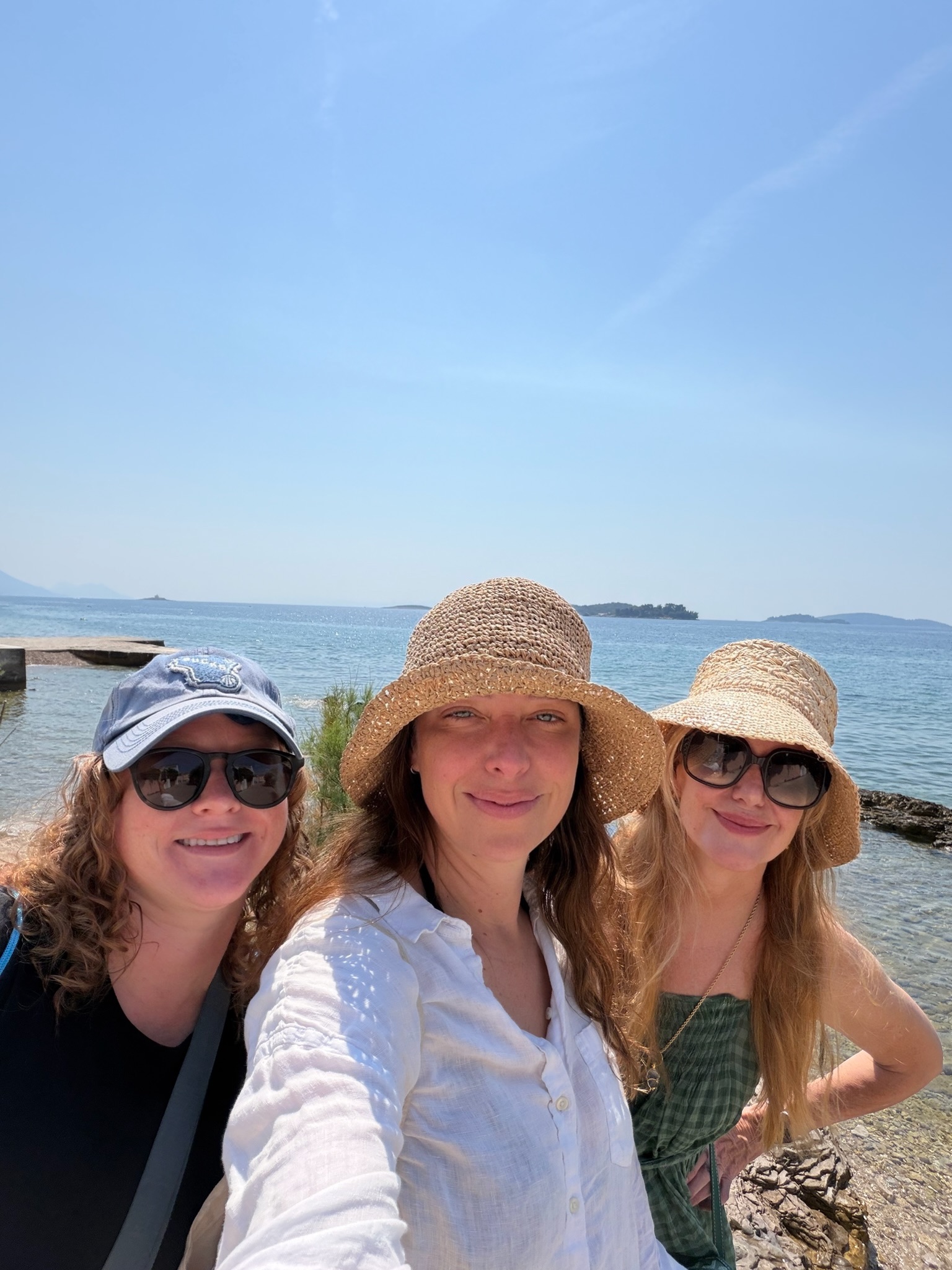
We traveled along the coast and stayed within the old city walls on the island of Korčula. History was everywhere, not sealed behind glass but present in the stone passageways, buildings, and food.
Traveling with another chef meant food naturally became the center of our days. We ate in wonderful restaurants and encountered flavors shaped by the many cultures that had passed through the region.
What surprised me most, though, was not what I ate. It was how freely I could eat it.
A Different Kind of Freedom
For most of the past 25 years, eating in restaurants while traveling had felt like walking through a minefield. I studied menus. I questioned ingredients. I worried that one meal might make me sick.
Over the last three years, I have learned that some of what I had called food allergies and sensitivities was also connected, in my case, to SIBO and mast cell flares. Understanding how those conditions showed up in my body changed the way I approached my health.
For almost two years, I had been working to bring my gut back into balance and calm those flares. Croatia interrupted a story I had carried for years: that eating while traveling would always require vigilance and fear.
I tried foods I once would have avoided. I sat down in restaurants without the usual inspecting, questioning, and bracing myself for what might happen afterward.
I did not get sick once.
Sharing a meal should feel ordinary. For me, after all those years, it felt like freedom.
Try a Small Detour
Croatia helped me notice the world again. I came to understand that through small things: an unfamiliar language, an impossible shade of blue, donkey-milk ice cream, and lunch alone after a missed flight.
We do not have to cross an ocean to shake ourselves awake. A different route through town might do it. So might leaving the headphones at home, walking into a market we have passed a hundred times, or picking up an ingredient we cannot name.
For this month’s recipe, begin somewhere you do not normally shop. Visit an international market, a neighborhood grocery on the other side of town, or a farmers market you have never entered. Walk slowly enough to notice what you usually pass.
When something unfamiliar catches your attention, listen for the objections that arrive with it:
I don’t know what that is.
I wouldn’t know how to cook it.
What if I don’t like it?
You do not need to turn the moment into a grand act of courage. Pick up the ingredient. Smell it. Ask someone how they prepare it. Bring it home and make something.
Then, if you feel like it, take a different route home.
I still think about how fiercely I resisted Pinewood and how much of my life grew from it anyway. I wish I could say that realization has made me welcome every unexpected turn. It has not. My first instinct is often still to brace myself and try to regain control.
But sometimes I remember that afternoon in Paris or the first bite of donkey-milk ice cream. I hear my grandmother telling me it will be okay.
I loosen my grip a little and look around.

This Month’s Pattern Interrupt Recipe
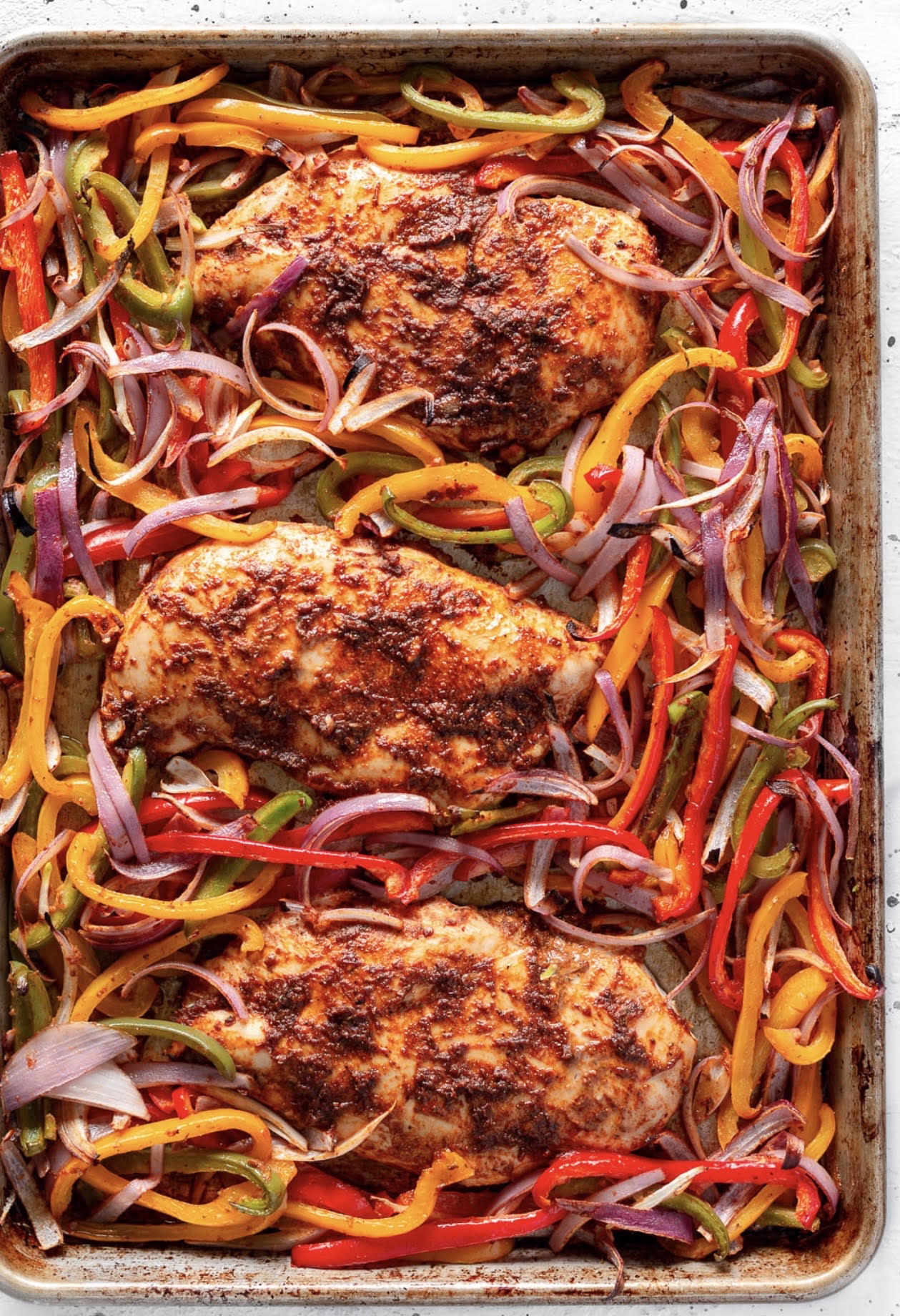
Sheet-Pan Chicken Kebabs with Ajvar Yogurt
These kebabs are inspired by the Turkish and Balkan flavors I encountered along the Croatian coast. They begin with familiar ingredients such as chicken, peppers, and onions, but sumac and ajvar take them somewhere new.
Sumac is a deep-red spice made from dried, ground berries. It tastes bright, tart, and a little earthy, almost like lemon without the liquid. Sumac also contains polyphenols, plant compounds known for their antioxidant activity. Early research suggests that concentrated amounts of sumac may support healthy blood sugar, cholesterol, and other markers of metabolic health. Here, its first job is simply to make dinner delicious.
Ajvar is a savory Balkan spread made primarily from roasted red peppers. Some varieties also contain eggplant, garlic, or chiles. It adds smoky sweetness, richness, and a gentle tang without requiring you to roast and peel the peppers yourself. In this recipe, plain Greek yogurt is turned into a flavorful sauce, but you can also spread ajvar on sandwiches, serve it with eggs, spoon it over grilled meat, or use it as a dip.
Look for sumac in the spice section of an international, Middle Eastern, Mediterranean, or Turkish market. Ajvar is usually sold in jars alongside roasted peppers, pickles, relishes, and imported condiments at Balkan, Eastern European, Mediterranean, and international markets. Some larger supermarkets carry it in their international aisle, and it is also available through online grocers. Choose mild ajvar unless you want the sauce to have some heat. I have ajvar and sumac here in my Amazon store, so you can click and order : Mee's Amazon Storefront
If either ingredient is unfamiliar, let finding it become part of the recipe.